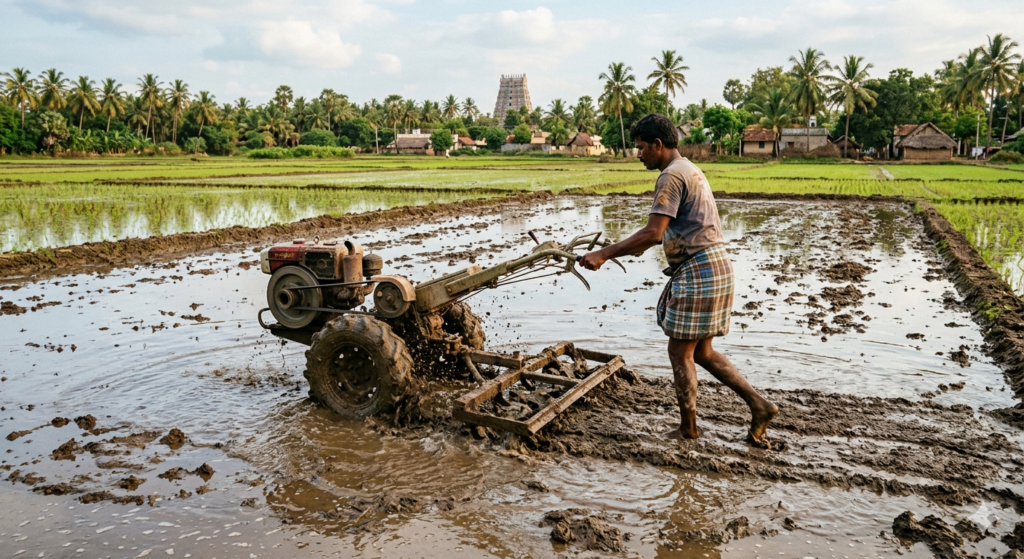
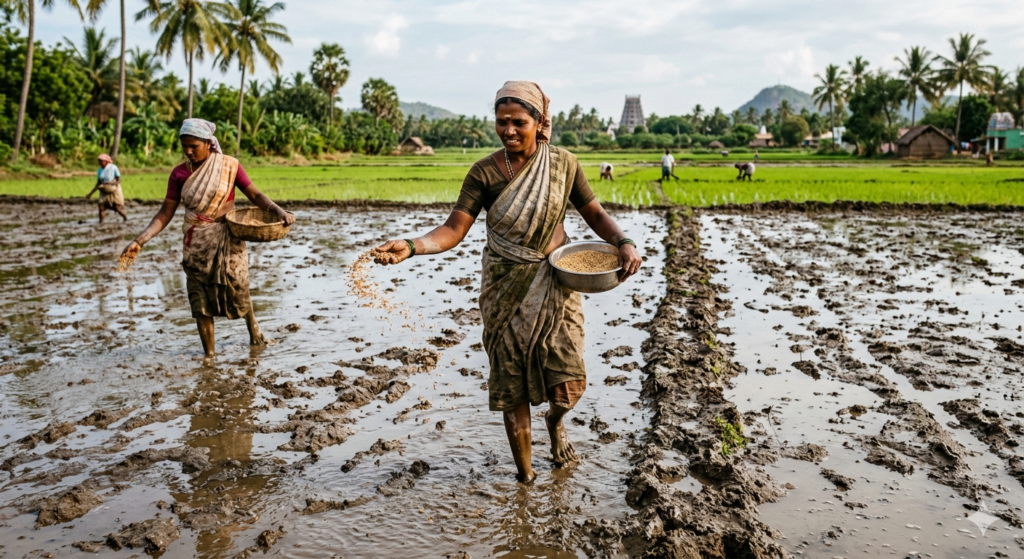
Method of Soil preparation plays a crucial role in achieving healthy crop growth and higher yields. Farmers eventually prepare the soil to create a favorable environment for seed germination, root development, and nutrient absorption.
1.Soil Preparation – Importance
a. To begin with , farmers prepare the soil to loosen compacted layers and improve aeration.
b. Specially Well-prepared soil allows roots to penetrate deeply and access nutrients more efficiently.
c. Added to this it also helps retain moisture while preventing waterlogging.
d. Consequently, proper preparation reduces weed growth and create a clean seedbed for planting.
Method of preparation – Organic Manure
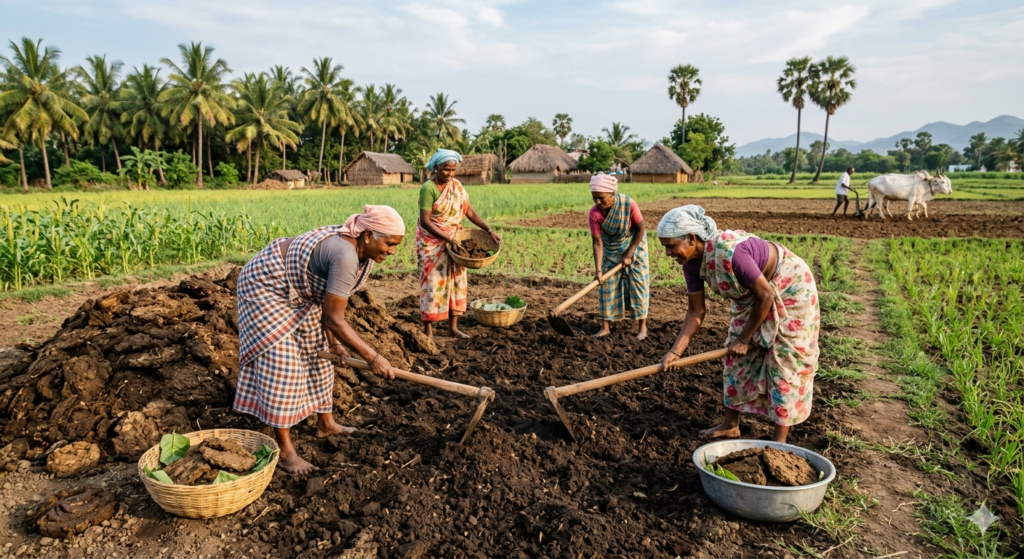
a. In fact farmers prepare organic manure with collecting fresh cow dung, mixing it with crop residues, kitchen waste, and water, and placing it in compost pits.
b. Secondly they cover the pits with soil or leaves, maintain proper moisture, and turn the mixture at intervals to ensure uniform decomposition.
c. Overall this process produces nutrient-rich organic manure that improves soil structure, boosts microbial activity, and enhances sustainable crop production.
Soil preparation method – Tillage
a. Tillage refers to the mechanical preparation of soil for planting crops.
b. In particular ,farmers loosen, turn, and mix the soil to improve aeration, control weeds, and enhance water in filtration.
c. For instance this process creates a suitable seedbed, supports root growth, and helps crops absorb nutrients efficiently for better yield.
2.Method of Primary Tillage
a. In fact Farmers use primary tillage as the first step in soil preparation.
b. In particular, this method involves deep plowing using tools like moldboard plows or disc plows.
c. Primary tillage breaks hard soil layers, removes crop residues, and improves soil aeration
d. As a result, farmers expose pests and weed seeds to sunlight, which reduces their survival rate.
3.Soil Preparation – Secondary Tillage Method
a. Subsequently , Farmers follow primary tillage with secondary tillage to refine the soil structure.
b. Evidently this step includes harrowing and leveling the field.
c. Most importantly Harrowing – Harrowing is the process of breaking soil clods and smoothing the field after plowing. Farmers use it to prepare a fine seedbed for planting.
d. Notably leveling ensures even water distribution, which supports proper seed germination and plant growth.
4.Method of using Organic Manure
a. Furthermore farmers spread well-decomposed compost of organic manure evenly across the field before planting.
b. Overall ,they mix it into the topsoil using simple tools or light tillage.
c. Ultimately this method improves soil fertility, increases organic matter, and enhances microbial activity.
d. In other words , crops absorb nutrients efficiently and grow healthier with better yield and long-term soil productivity.
5. Soil Preparation Method – Benefits
a. Of course , soil preparation with organic manure improves soil fertility and structure.
b. To put it simply, it increases water retention and enhances microbial activity.
c. Moreover, it supplies essential nutrients naturally.
d. As a result, plants grow healthier and stronger.
e.In addition to these structural improvements, it reduces chemical dependency and supports sustainable farming.
f. As a result of this data , farmers achieve better yields while maintaining long-term soil health and environmental balance.
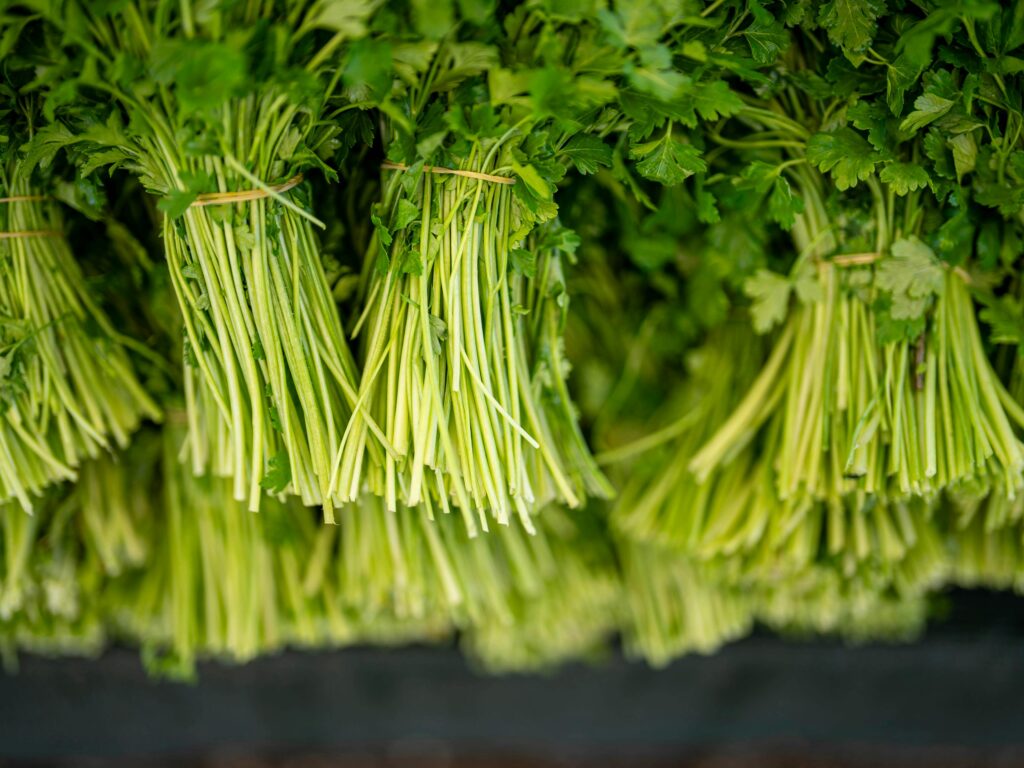
As a concluding observation, Coriander leaves are the organic food products widely used in organic farming and healthy cooking.
Q1: What is the primary difference between Primary and Secondary Tillage?
A: Furthermore, primary tillage involves deep plowing to break hard soil layers, while secondary tillage focuses on refining the soil surface and leveling it for seedbed preparation.
Q2: Why is leveling considered a critical final step in soil preparation?
A: Building on the initial tillage phases, leveling ensures even water distribution across the field. Consequently, this prevents localized waterlogging and supports uniform seed germination by stabilizing the soil’s topography.
Source from –
S.Rajappan,
Retd. Agriculture chemist,
Agricultural Department,
State Government of Tamilnadu.
Disclaimer
“I created this website, Iyarkai Food Products, as a sample project for educational and digital marketing study purposes. In fact, the products and business details shown here are imaginary. However, the information regarding organic farming and soil preparation is based on real agricultural research. Consequently, I developed this platform to practice On-Page SEO while sharing accurate farming techniques. Most importantly, please note that this website does not offer real transactions or services.”