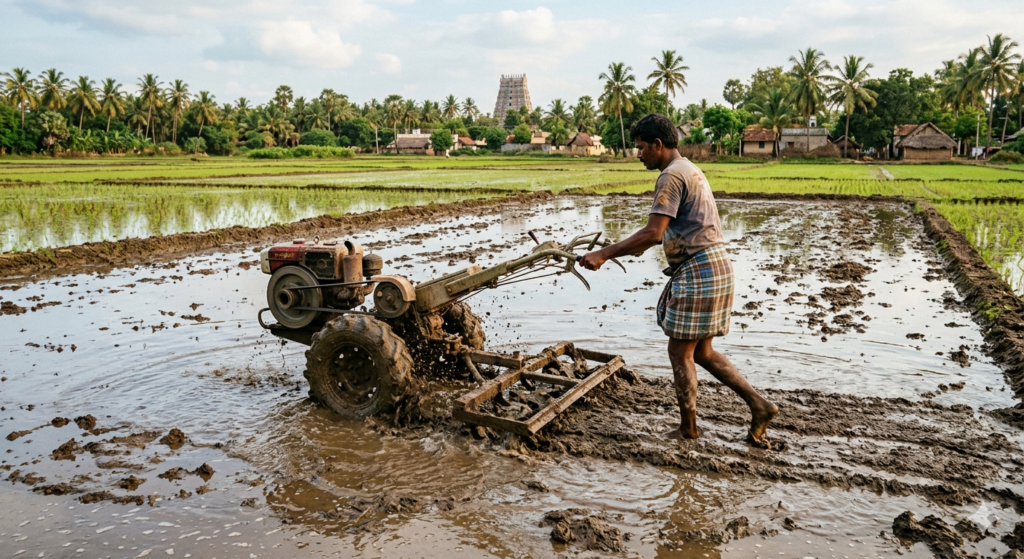
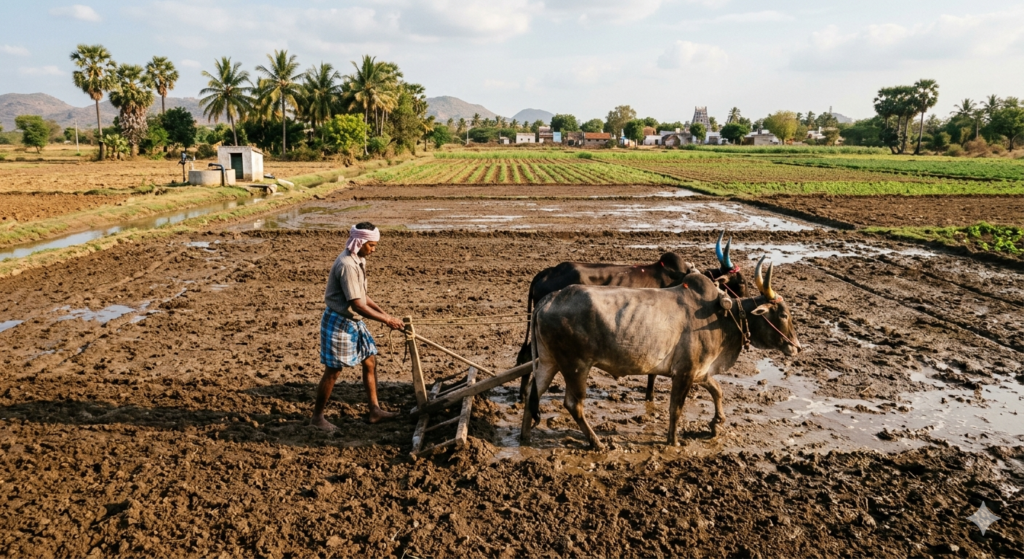
How to seed rice in soil after puddle is the most important question for all farmers before cultivating rice.
1.How to Seed Rice
Before you cast a single seed into the field, you must prepare them to ensure fast, uniform germination. Pre-soaking and pre-germinating your seeds is crucial because it gives them a head start in the soft mud.
a. Soaking :Submerge your certified rice seeds in clean water for 24 hours. This allows the seed to absorb necessary moisture. Moreover, the process of soaking rice seeds is the first stage of organic germination to ensure high crop yield.
b. Sprouting (Incubation):Drain the water and place the seeds in a gunny bag or cover them with a damp cloth in a warm, shaded area for another 24 to 36 hours.
c. Ready to Sow: The seeds are ready when a small white sprout (radicle) of about 2-3 mm is visible. Do not let the sprout get too long, or it will break during sowing.
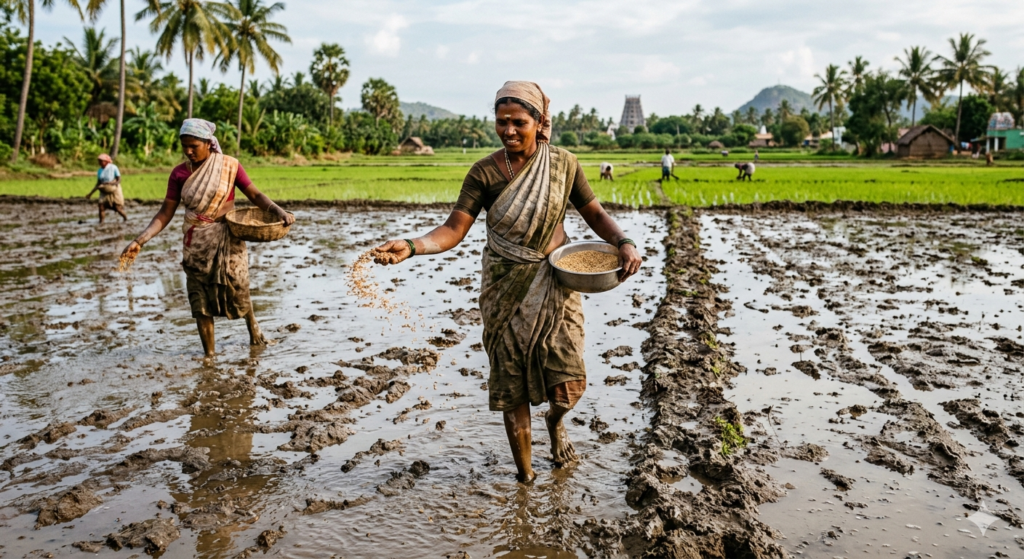
2.How to Seed Rice Techniques: Broadcasting for Uniform Growth
Once your seeds have sprouted, now in the puddle field farmers have to sow. The goal is to achieve an even distribution of seeds to prevent overcrowding and ensure strong plant development.
a. Seed Rice Hand-Broadcasting:
This is the most traditional method. It requires practice to ensure the farmers spread seeds evenly across the field.
b. Seed Rice – Drum:
For larger fields, we highly recommend a drum seeder for farmers. It creates straight rows, makes weeding and water management much easier later on.
3.Seeding Rice – Managing Water Levels After
a. Immediately After Sowing: The field should have no standing water. The soil should be muddy and wet, but not submerged.
b. To maintain this environment, keep the soil moist during days 1-5. If the soil surface starts to dry, add a very shallow layer of water (about 1-2 cm) and then let it drain away.
c. After 5-7 Days: Once the seedlings have firmly rooted and are about 10 cm tall, you can gradually increase the water level to 5 cm to manage weeds.
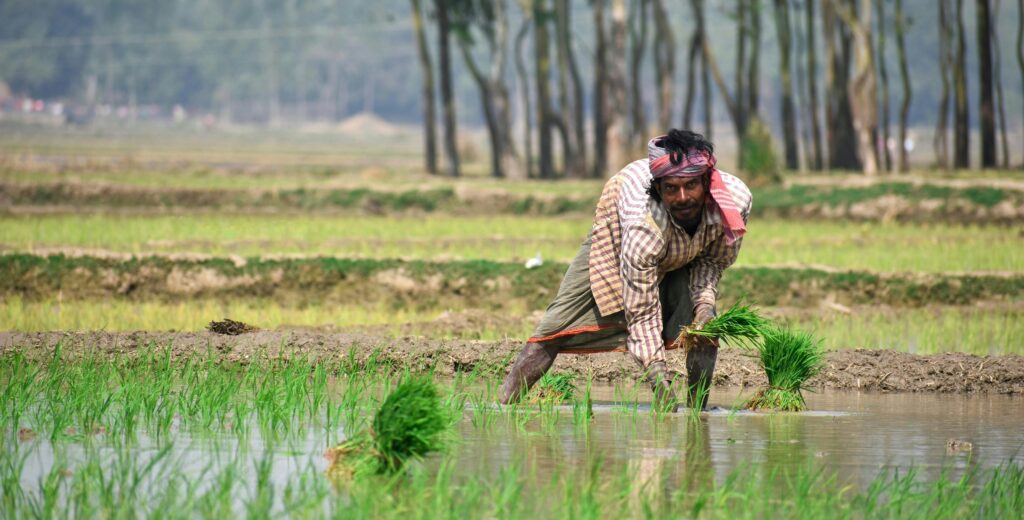
4.How to Post-Seeding Rice Care: Protecting Your Crop
a. Following the initial sowing, bird management becomes the primary priority . You may need to use noise-makers, scarecrows, or reflective tapes to keep them away until the seeds are fully rooted.
b. Initial Weed Control: Because the field is not fully flooded yet, weeds might try to grow. Keep a close eye on the field and manage weeds early before they compete with the young rice plants.
Seeding rice
Seeding rice in puddled soil is an efficient way to establish your crop, but success depends on preparation and timing. Ensuring your seeds are properly germinated, spreading them evenly, and managing the water levels meticulously, you set your farm up for a bountiful harvest.
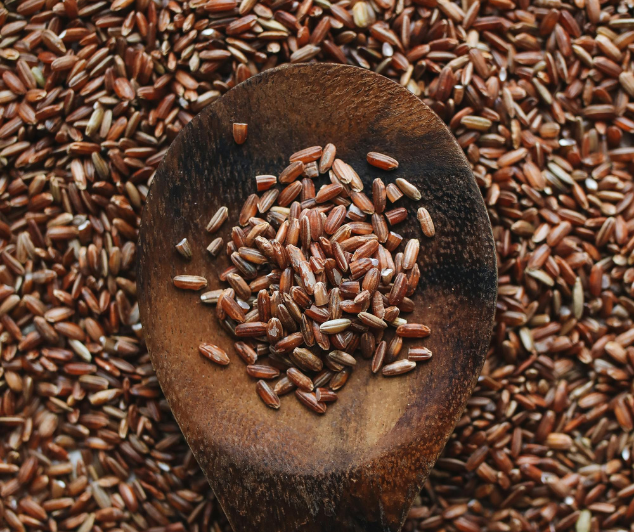
Finally, Farm-Fresh Red Rice are widely used in organic farming and healthy cooking.
While seeding is a critical step, it works best when combined with proper soil preparation, which is a core value we uphold at Iyarkai Food Products.
Q 1: Focuses on the “Puddling” keyword and internal linking?
A: Ideally, you should start seeding immediately after the final puddling stage while the soil is still soft and muddy. Specifically, this ensures the sprouted seeds can root quickly. For more details on preparing your field, see our guide on What is Puddling in Agriculture.
Q2: Why is pre-germination important in organic rice cultivation?
A: In organic farming, avoiding chemical growth stimulants is key. Pre-germinating seeds (soaking for 24 hours and incubating for 36 hours) naturally triggers the seed’s enzymes. This gives the plant a head start to compete against weeds without the need for synthetic herbicides, ensuring a stronger, more resilient crop.
Source from –
S.Rajappan,
Retd. Agriculture chemist,
Agricultural Department,
State Government of Tamilnadu.
Disclaimer
“I created this website, Iyarkai Food Products, as a sample project for educational and digital marketing study purposes. In fact, the products and business details shown here are imaginary. However, the information regarding organic farming and soil preparation is based on real agricultural research. Consequently, I developed this platform to practice On-Page SEO while sharing accurate farming techniques. Most importantly, please note that this website does not offer real transactions or services.”